The live proceedings from the first day of the AIMA 2021 Congress, entitled "Past and Future Agricultures", on Thursday 22nd July 2021.
You can find all of the presentations and break-time videos in the AIMA 2021 playlist: https://youtube.com/playlist?list=PLzTiN3Zhaqup8k6kQ1FYtZ8X6qxmli1S0
https://twitter.com/AgriMuseums
https://www.agriculturalmuseums.org/
Welcome from AIMA 2021 hosts, The MERL
Isabel Hughes, Vice-President of the AIMA / Associate Director + Head of Curatorial and Public Engagement, The MERL, University of Reading
Kate Arnold-Forster, Director of The MERL + Director of University Museums and Special Collections Service, The MERL, University of Reading
Ollie Douglas, President of the AIMA / Curator of MERL Collections, The MERL, University of Reading
Session 1
ORDINARY SESSION: New Approaches to Museums of Farming
Chair: Pete Watson, Director, Howell Living History Farm
This session comprises four short, pre-recorded papers, followed by livestream panel discussion, reflections, and Q&A. Our panel of experts shares insights and ideas relating to new museologies in the field of agricultural heritage.
Winani Thebele, Chief Curator and Head of Ethnology, Botswana National Museum
The Bonnington Colonial Legacy: Conserving and Restoring Farming Heritage
This project depicts the history of early colonial farming in Botswana's capital, Gaborone. Key exhibits include the farmhouse, grain silos, ox wagons, feeding troughs, and farm implements. Artists were invited to paint murals of farm activities on the silo walls. Botswana was a British Protectorate until 1966 when it gained independence. Exploring the traces of this colonial history, this paper offers critical analysis of colonial farming in Botswana, of its impact on local communities, of how it might have informed the current agricultural practices of the local populace, and of how sustainable this legacy has been.
Elsa Hietala, Curator, Sarka Finnish Museum of Agriculture
Creating New Approaches at the Finnish Museum of Agriculture
Sarka's latest displays present the salvaged eighteenth- and nineteenth-century collections of Helsinki University Agriculture Museum. These are designed to be accessible to all. The Museum is currently developing the national Food Museum, using events, exhibitions, tours, workshops, and online content to explore food from many perspectives. Current global challenges in climate, food production, and consumption increase the need for us to present the impact of the food choices we make. Sarka wants to bring historical perspective to this conversation.
Bob Clark, Director, Auchindrain Township
Best Practice in the Thorny Field: Recent Approaches at Auchindrain
Director of a regional museum with a site-specific agricultural history and former Chair of the UK's Rural Museums Network (RMN), Bob Clark, introduces us to the approaches his institution favours and why they make sense there but perhaps not everywhere.
Benjamin Chiu-hang Sin, Senior Social Work Supervisor, Caritas-Hong Kong
A Community-Driven Movement on Revitalising the Old Hong Kong Dairy Farm Heritage Site
The Hong Kong Dairy Farm Company, now a multinational corporation, was founded in 1886 to bring hygienic, nutritious and affordable milk to the community. The dairy farm closed in 1985 but was rediscovered by neighbouring villagers. Supported by a local charity and the Dairy Farm Company this work led to public tours and workshops, the listing of historic buildings, and formation of the largest built-heritage cluster in the City. The team also turned the Old Farm Manager's House into a museum of sustainable rural development.
Session 2
ROUNDTABLE SESSION: Climate, Environment, and Sustainability
Chair: Surajit Sarkar, Coordinator, Centre For Community Knowledge, Ambedkar University
This session comprises three short, pre-recorded papers, followed by livestream panel discussion, reflections, and Q&A. Together the panel explores and shares insights and ideas relating to the role and place of environmental history in museums of farming.
Cameron Archer, Agricultural and Environmental Historian, Publications Webpage
Debra Reid, Curator of Agriculture and the Environment, The Henry Ford
David M. Simmons, Executive Director, Billings Farm and Museum
Session 3
KEYNOTE SESSION: Art and Agriculture
Chair: Isabel Hughes, Vice-President of the AIMA / Associate Director + Head of Curatorial and Public Engagement, The MERL, University of Reading
This session comprises a 30-minute-long pre-recorded keynote paper, followed by livestream discussion, reflections, and Q&A.
Speakers: Adam Sutherland, Director, Grizedale Arts
Connecting Resources - Cultivating Communities
Adam Sutherland will discuss the reinvention and evolution of Lawson Park, a long derelict Cumbrian hill farm that is now the hub of a complex programme of collaborations between farming communities from Yamaguchi to Southside Chicago.
- Category
- Hot girl stream
Commenting disabled.
Up Next
Autoplay
-
2:33:00

TOP Shuffle Dance 2021 ♫ Alan Walker Remix 2021 ♫ New Shuffle Dance 2021 & Best Electro Dance 2021
-
11:48
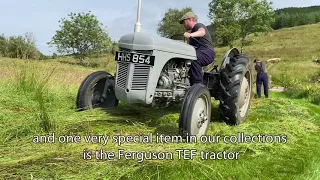
AIMA 2021 1.3 BOB CLARK
-
2:13:26

NOV 22, 2023 | TODAY IS A DAY IS A DAY IS A DAY IS A DAY IS A DAY IS A PROLAPSE
-
11:52:12

2021 New Songs ( Latest English Songs 2021 ) ???? Pop Music 2021 New Song ???? English Song 2021
-
19:43

Borderlands 2 Stream Trolling! Borderlands Community Loves Hot Girls and Boobs! 69 viewers?!?!
-
13:32

I Stream Sniped My Girlfriend's FASHION SHOW! (Fortnite)
-
07:27

Rog (Annie)stream VS unq Gamer ???????? InterestinG fight???? In stArt of the game
-
15:16

REACTING TO THE FUNNIEST TWITCH LIVE STREAM FAILS EVER
